
Zúčastnite sa nášho nadchádzajúceho webinára s názvom „Môžete sa spoľahnúť na namerané údaje?“ 27. októbra 2026 o 10:00 SEČ. Zaregistrujte sa tu
Každý rok v januári vám Solargis prináša mapy, na ktorých sú zhrnuté anomálie globálneho horizontálneho žiarenia (GHI) za minulý rok. Tento rok nie je výnimkou.
Tieto mapy poukazujú na to, ako veľmi sa regionálne poveternostné podmienky odchýlili od dlhodobých priemerov (LTA), a pomáhajú tak realizátorom projektov, správcom aktív a investorom pochopiť, ako mohla atmosférická variabilita ovplyvniť výkonnosť fotovoltických elektrární na celom svete.
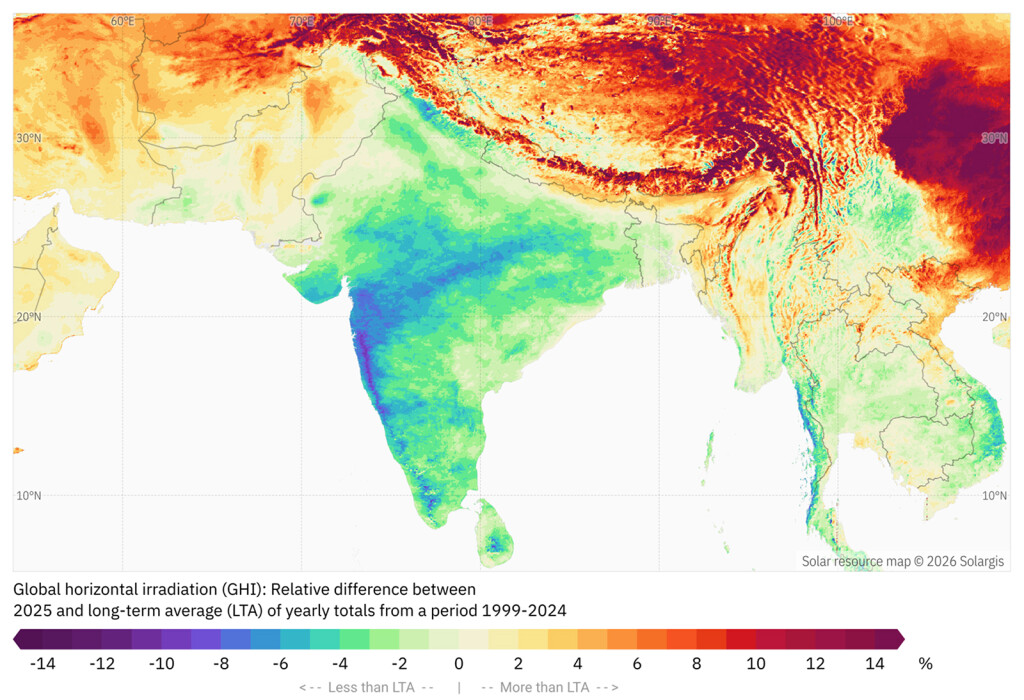
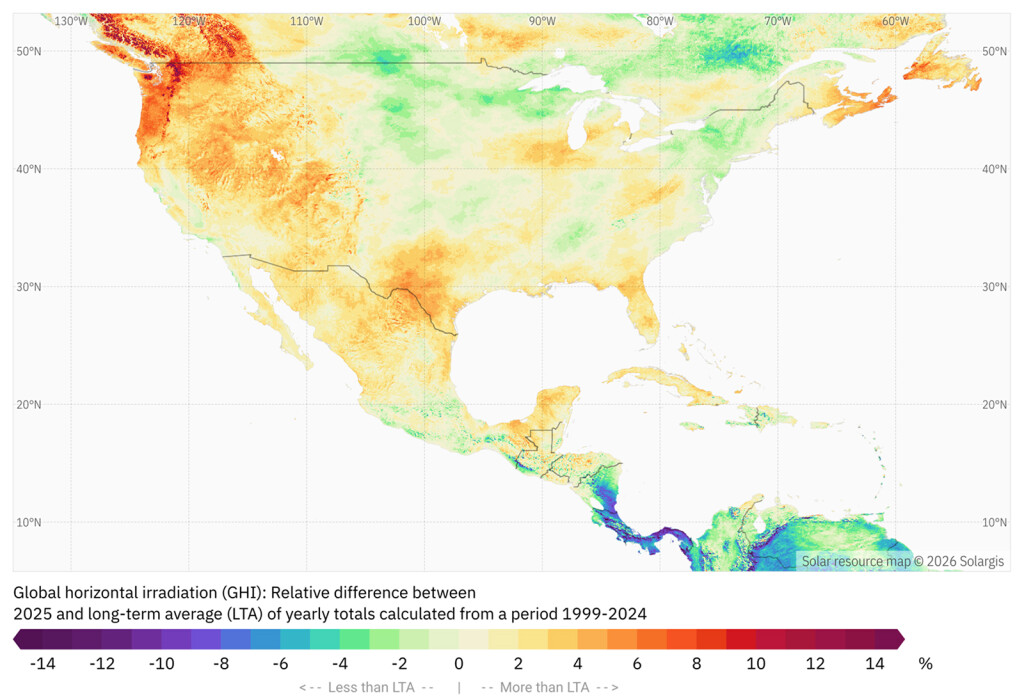
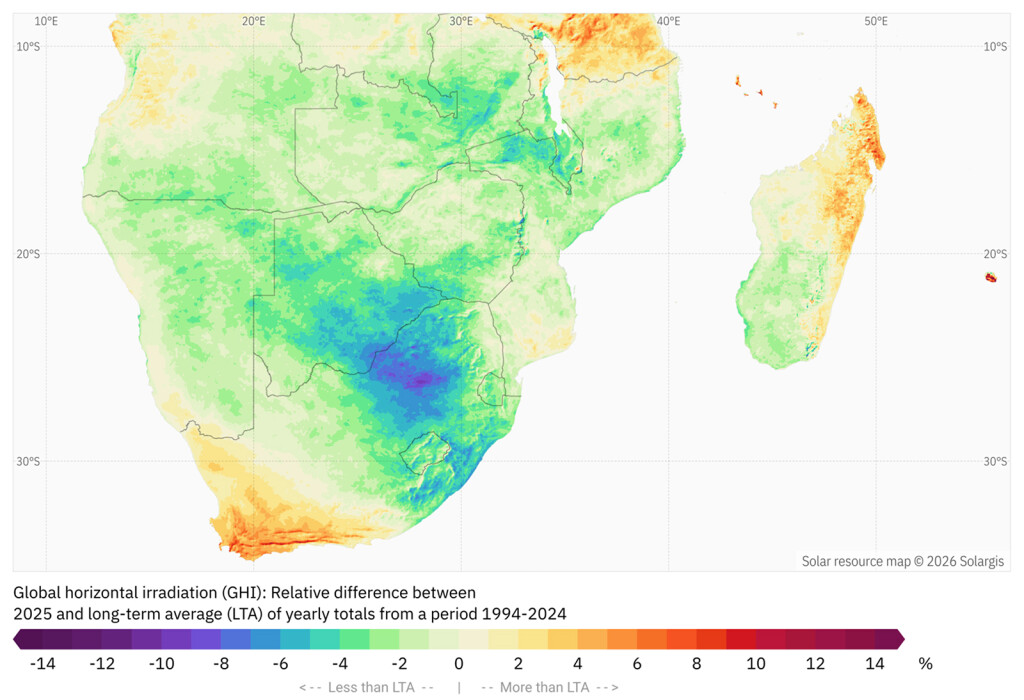
Mapy rozdielov GHI 2025 ukazujú, že globálne slnečné žiarenie dosiahlo v minulom roku pozitívne aj negatívne extrémy, pričom najvyššie pozitívne anomálie dosiahli až 20 % nad dlhodobými priemermi.
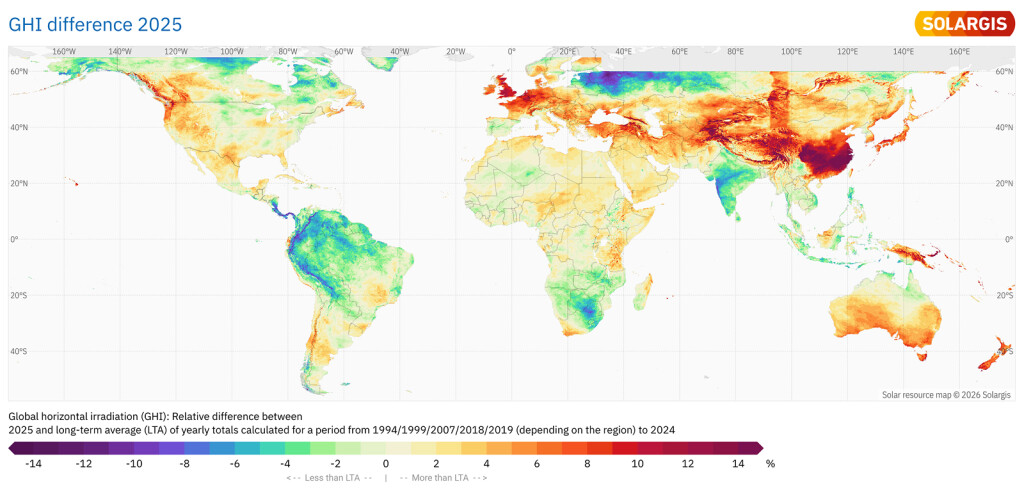
Poznámka: Tento rok sme rozšírili našu štandardnú legendu farebnej škály na rozsah -14 % až +14 % (predtým -12 % až +12 %) kvôli extrémnej anomálii v strednej Číne.
Nižšie sa podrobnejšie venujeme vybraným regiónom.
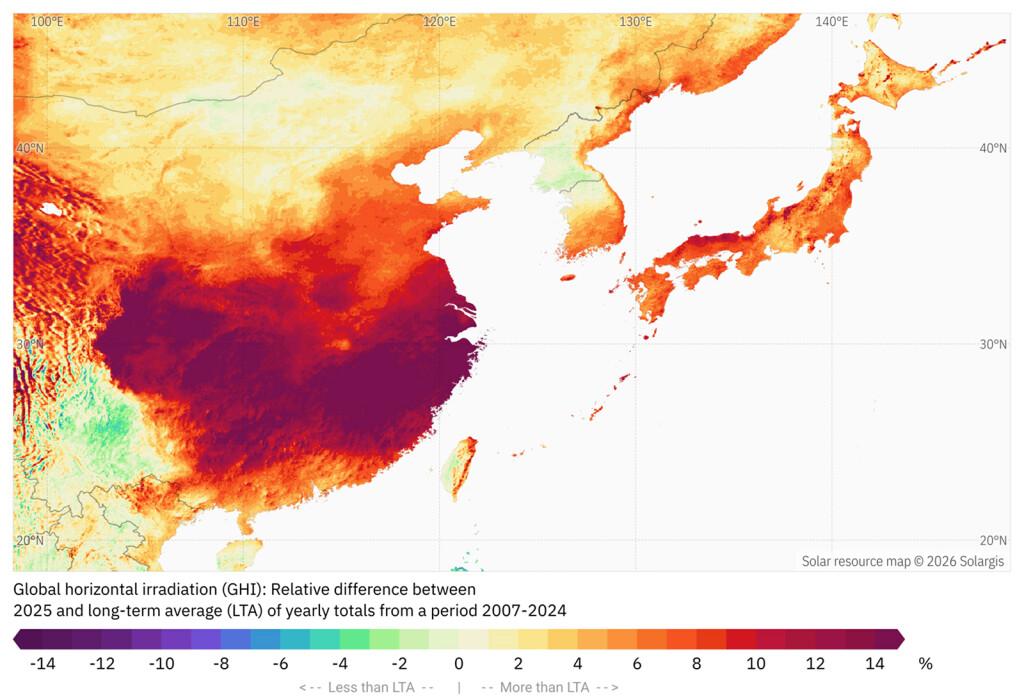
Výrazným príbehom roku 2025 je východná Ázia, najmä stredovýchodná Čína a časti povodia S'-čchuanu. Stredovýchodná Čína zaznamenala +15 % nad dlhodobým normálom, pričom časti S'-čchuanskej panvy dosiahli +20 %. Pokračuje tak viacročný trend: všetky posledné štyri až päť rokov boli nadpriemerné, čím sa rok 2025 stáva ďalšou výnimočnou kapitolou pre prevádzkovateľov fotovoltických elektrární v týchto provinciách.
Aj susedné krajiny zaznamenali silný rok. Japonsko a východné pobrežné regióny Južnej Kórey zaznamenali rozsiahle anomálie od +4 % do +10 %, čo podporilo nadočakávanú produkciu fotovoltaiky na mnohých miestach.
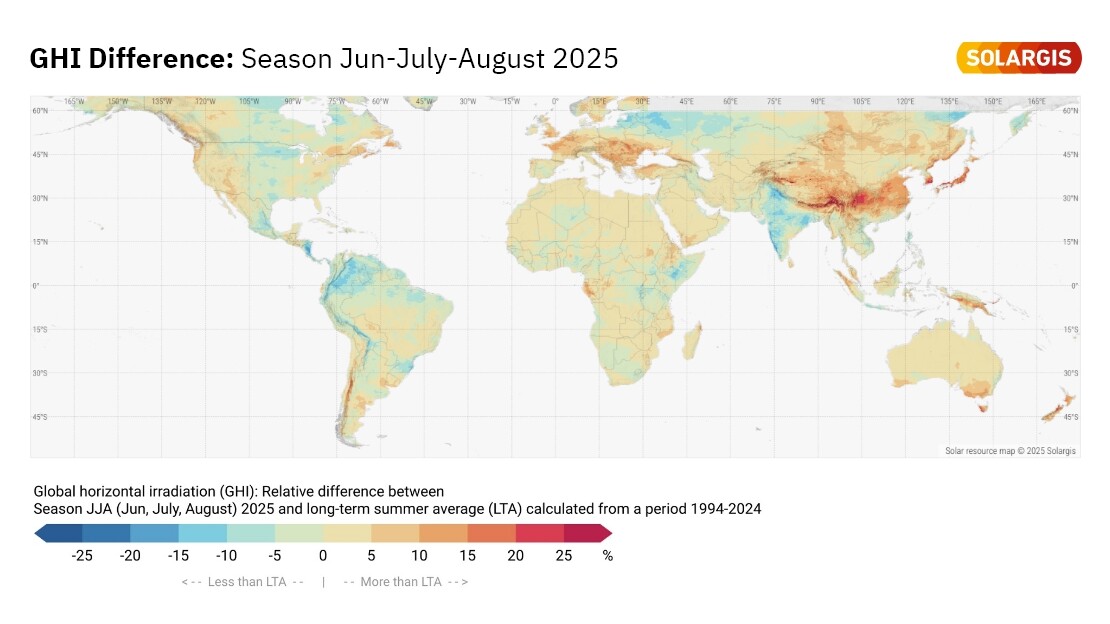
Tieto anomálie slnečného žiarenia boli zjavné už počas leta 2025, keď Japonsko zažilo rekordnú vlnu horúčav.
Celkovo bol dostupný solárny zdroj v tomto regióne o 13 % až 22 % vyšší ako dlhodobý letný priemer, pričom v niektorých miestnych oblastiach prekročil 25 %. Okrem podmienok slnečných zdrojov boli mimoriadne vysoké aj teploty vzduchu. Tretí rok po sebe krajina zaznamenala nový rekord v priemerných júlových teplotách, pričom júl 2025 skončil o 2,89 °C nad klimatologickým priemerom z rokov 1991 - 2020.
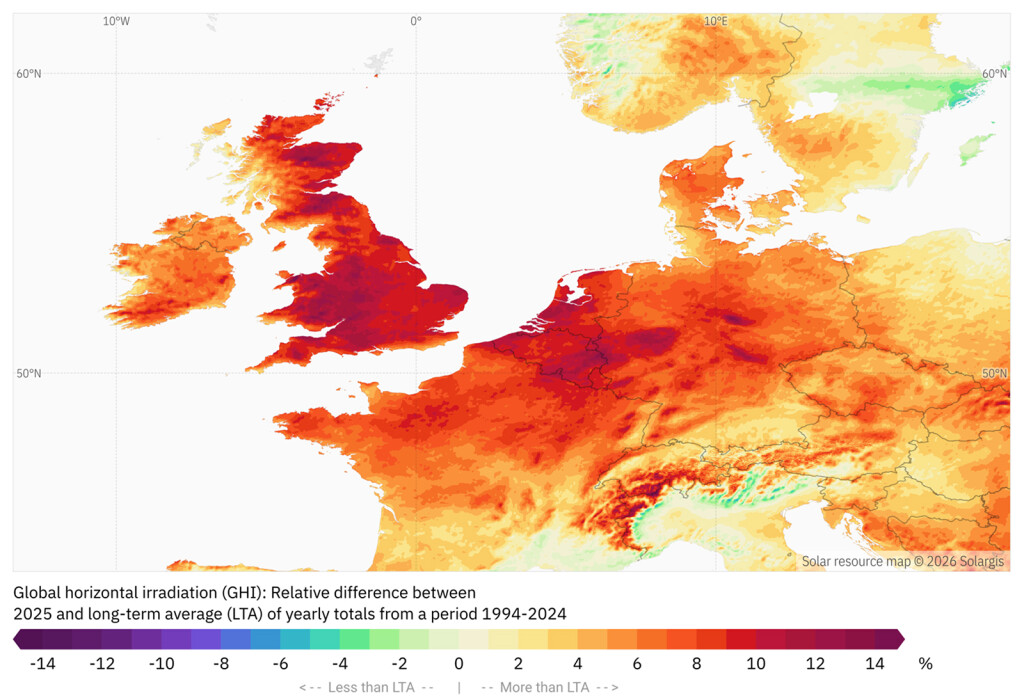
V Európe priniesol rok 2025 pozitívne (nadpriemerné) anomálie, hoci ich úroveň sa na kontinente líšila. Najmä Spojené kráľovstvo malo najslnečnejší rok v histórii a údaje Solargis ukazujú, že mnohé regióny v Spojenom kráľovstve a Beneluxe zaznamenali žiarenie presahujúce +10 % v porovnaní s LTA. Veľká časť západnej, strednej a juhovýchodnej Európy dosiahla hodnoty +4 % až +10 % nad normálom.
Pre prevádzkovateľov projektov, ktorí sa stretávajú s nízkymi maržami a nestabilnými trhmi, ponúkol rok 2025 vítané zvýšenie výnosov v celej Európe.
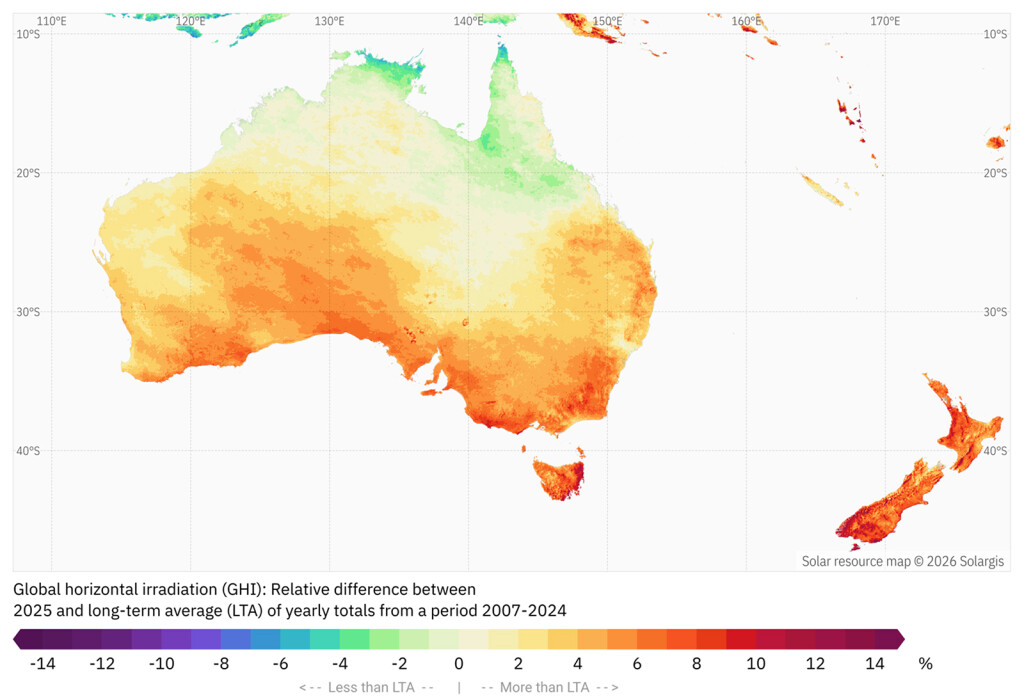
Ďalší pozitívny bod sa objavil v juhovýchodnej Austrálii a na Novom Zélande, kde sa hodnoty zvyčajne pohybovali od +3 % do +10 %. Developeri v tomto regióne hlásili anekdotne silné produkčné mesiace, ktoré sú v súlade so vzorcami, ktoré vidíme na mape 2025.
Lokálnejšia, ale pozoruhodná pozitívna špička sa objavila nad ostrovmi Nová Británia a Nové Írsko (Papua-Nová Guinea), kde anomálie žiarenia často presahovali +15 % nad LTA.
Nie všetky časti sveta sa podieľali na nezvyčajne jasnom roku.
Väčšina Indie opäť zaznamenala podnormálny rok v rozmedzí od -1 % do -8 %, pričom najsilnejšie anomálie boli na juhozápadnom pobreží (až -10 %). Jedným z faktorov ovplyvňujúcich dostupný slnečný zdroj bolo nezvyčajne dlhé a intenzívne monzúnové obdobie.
V porovnaní s predchádzajúcimi desaťročiami monzún vykazoval výrazné zmeny vo svojom správaní, ako analyzovali viaceré zdroje (napr. tento článok v médiách). Tieto podmienky zdôrazňujú dôležitosť zohľadnenia premenlivosti monzúnov pri plánovaní a prognózovaní slnečnej energie.
Zatiaľ čo Spojené štáty, Kanada a Mexiko zaznamenali celkovo stabilný solárny výkon, Stredná Amerika zaznamenala výrazný pokles slnečného žiarenia - najmä v Paname, Kostarike a Nikarague. Dôvodom bola najmä nadpriemerne silná sezóna hurikánov v druhej polovici roka, keď silné dažde znížili dostupné solárne zdroje. Údaje Solargis ukazujú úrovne GHI -7 % až -12 % pod priemerom.
Ďalšie pozoruhodné modely boli pozorované v regióne Johannesburg-Pretoria (Južná Afrika), kde anomálie dosiahli -8 %.
Lokálne poklesy v rozmedzí -5 % až -8 % sa objavili aj v juhovýchodnej Ázii vrátane stredného Vietnamu, severozápadnej Malajzie, strednej Jávy a okolitých ostrovov. Ďalšou výrazne tmavou oblasťou v roku 2025 bola oblasť medzi Moskvou a Petrohradom, kde anomálie presiahli -12 %.